Learn more about the Vision Care Technology Program and how you can start your career in optometry!
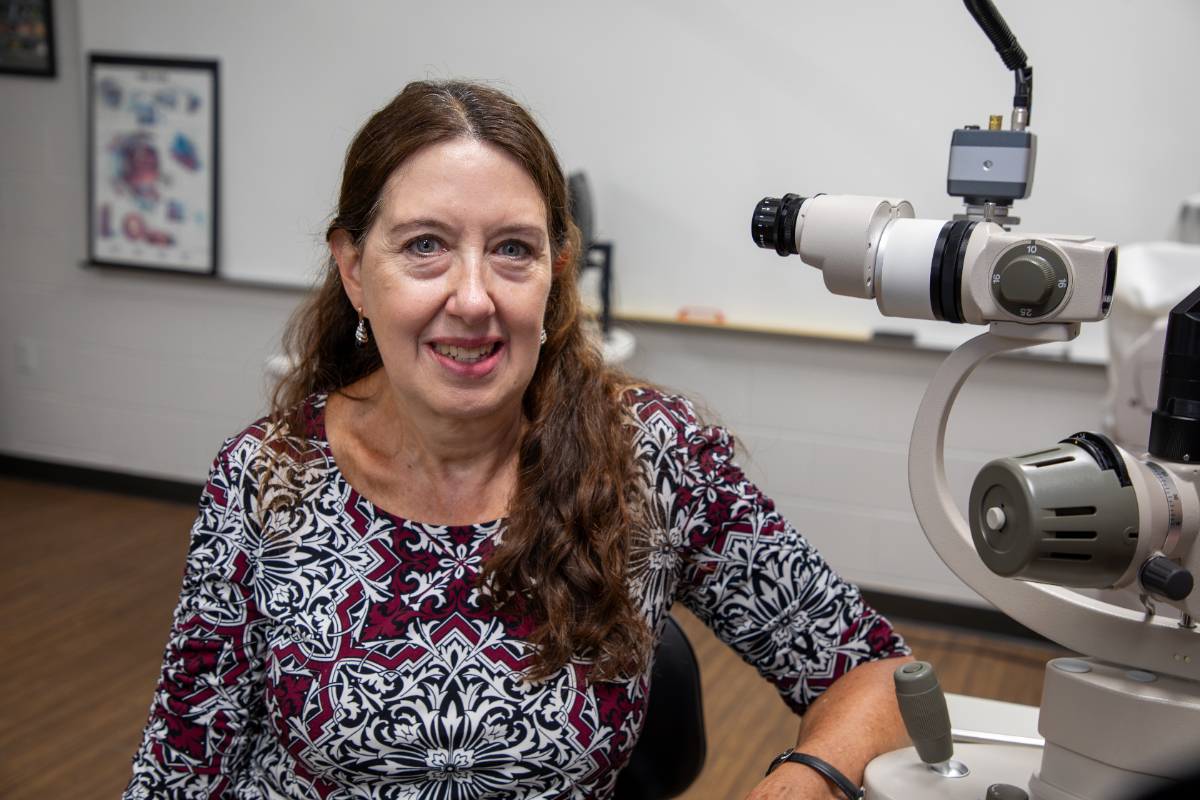
With family roots in the vision care profession, SUNY Erie Community College alumna Janet Acara was inspired at an early age to follow in her father’s footsteps. Growing up, she learned that helping someone see clearly could transform not only their vision but also their quality of life. That path led her to SUNY Erie, where she began her journey as a vision care student. She has come full circle, returning to leading the program that launched her career, Vision Care Technology.
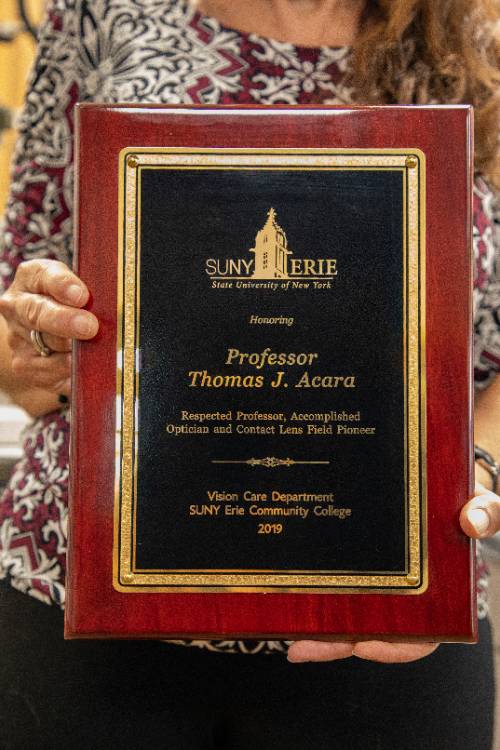
Acara is a nationally recognized leader in vision care education who shares her expertise and passion for teaching, inspiring the next generation of optical professionals. Earning an Associate of Applied Science in Ophthalmic Dispensing, the previous program name, her degree launched Acara’s career in vision care and eventually brought her back to SUNY Erie as a professor and department chair. In this leadership role, she continues a family legacy of dedication to vision care, following in the footsteps of her father, Thomas J. Acara, who was a professor in the program.
Today, Acara leads the Vision Care Technology program with the same commitment to student success. In addition to overseeing instruction, accreditation, curriculum development, recruitment and industry partnerships she teaches the contact lens curriculum and mentors students. She also collaborates with employers, high schools and community organizations to expand awareness of optical industry careers.
After graduating from SUNY Erie, Acara joined her father's optical practice, Tonawanda Contact Lens, eventually becoming its owner while serving patients as an optician and contact lens practitioner. As her family grew, she chose to shift her focus from business ownership, selling the practice to an ophthalmologist while continuing to work part-time to maintain her clinical skills and continue caring for patients.
Education has always been part of Acara's story. She earned a bachelor's degree in Health and Human Services from Empire State University while continuing to practice, then accepted an invitation to teach as an adjunct instructor at SUNY Erie where she discovered a passion for the classroom. She joined the faculty full-time and went on to earn a master's degree in Adult Education from Buffalo State University, further expanding her leadership skills and commitment to higher education.
 "My father held this same position at SUNY Erie 31 years before I did, and until the
pandemic, I was working from the very same desk," said Acara.
"My father held this same position at SUNY Erie 31 years before I did, and until the
pandemic, I was working from the very same desk," said Acara.
"Margaret Acara Ph.D., my mother, was also an educator, so teaching has always felt like a natural part of who I am."
A strong advocate for experiential learning, Acara ensures students connect classroom experience with experience through externships at optical practices, laboratories and retail organizations. She helps students graduate with the confidence, skills and hands-on experience needed to succeed as vision care professionals.
The program's state-of-the-art contact lens lab provides students with unique biomicroscope viewing and hands-on learning opportunities. Recent donations of eyeglasses fabrication equipment from Luxottica have further expanded the lab's cutting-edge training capabilities.
Acara leads the program’s accreditation through the Commission on Opticianry Accreditation, overseeing outcomes, compliance, annual reporting, accreditation reviews and continuous quality improvement. She remains active in clinical practice and fits contact lenses at an ophthalmology office, allowing her to stay connected to patient care and bring current industry knowledge into the classroom.
"The most important lesson I've learned is that careers are rarely linear," Acara said.
"There are seasons for family, seasons for growth and seasons for new opportunities. If you stay curious, continue learning, and remain open to change, those experiences often lead to opportunities you never imagined."
Acara is one of only 33 professionals nationwide to earn a Master Certification from the National Contact Lens Examiners and is a fellow of the Contact Lens Society of America. She is a recipient of the inaugural Best in Contact Lenses Award from the New York State Society of Opticians and has held numerous leadership positions, including board member of the National Contact Lens Examiners, director of the Contact Lens Society of America, president of the Contact Lens Society of New York State, chair of the Auxiliary Services Corporation at SUNY Erie, contact lens fitter at EyeSight Medical Center and owner of the Tonawanda Contact Lens Center.
At the heart of Acara's career is a belief that education transforms lives. Through mentorship, hands-on education and strong partnerships with the optical community, she embodies SUNY Erie’s mission of supporting student success.
How did you become interested in your field?
I often say that opticianry is a family business. My father was an optician and educator, so I was introduced to the profession at an early age. In fact, I have been walking the halls of SUNY Erie's Bretschger Hall, 100 wing, since I was six years old, accompanying him to work long before I became a student myself. What began as a family tradition has become a rewarding career.
What's one innovation, teaching strategy or program that makes SUNY Erie stand out?
SUNY Erie’s Vision Care program stands out with its hybrid course model, which blends online learning with essential hands-on clinical and laboratory training. This flexible format reduces first semester on-campus time to one day per week, making the program more accessible for working adults, parents and commuters. Students still gain strong practical experience through labs, contact lens clinics and externships.
What skills do today’s students need most to succeed in tomorrow’s workforce?
Today’s vision care professionals need more than technical skills. They need strong communication, compassion and professionalism. Successful opticians must be able to listen to patients, explain information clearly, and build trust with people from all backgrounds. Attention to detail, critical thinking, adaptability, and problem-solving are also essential. Lifelong learning is key, along with continuing education and professional certification. Involvement in professional organizations and ongoing engagement in the field also help students grow.
What’s changing in the vision care industry?
The vision care industry is rapidly evolving with advances in digital lens technology, freeform optics, specialty contact lenses, automation, and electronic health records, along with rising patient expectations for personalized care. To stay current, we regularly update our curriculum and provide hands-on training in dispensing, contact lenses, and optical fabrication, plus real-world externship experience.
How does SUNY Erie uniquely support equity and access for students?
SUNY Erie serves students from a wide range of backgrounds and life experiences and provides flexible pathways to help them succeed. Programs like SUNY Reconnect further improve access by making college more affordable for adult learners.
What inspires you to work at SUNY Erie?
The opportunity to make a meaningful difference in students’ lives. I work with a diverse group of students who often balance work, family and other challenges while pursuing their education, and it is rewarding to see them grow in confidence and skills.
Was there a professor who really stood out during your time here?
Without a doubt, Pat Breen, my contact lens instructor. He taught me the technical aspects of contact lenses and became a mentor and role model. My father was his contact lens instructor when Pat was a student. I was fortunate to have the opportunity to sit in at Pat's classes before his retirement. I learned the curriculum but also his teaching philosophy, classroom management techniques and commitment to student success. As a result, I was able to step into the role fully prepared and with a deep appreciation for the tradition of excellence that he established. The lessons I learned from Pat extended far beyond contact lenses. His influence continues to influence the way I teach and lead the Vision Care program today.
What did you appreciate the most about SUNY Erie?
How well the Vision Care program prepared me for my New York State licensing exams and a successful career. The combination of strong classroom instruction and hands-on clinical experience built my confidence to enter the field right after graduation. I valued the affordability, 60-week accelerated format and small class sizes, which made pursuing a healthcare career both accessible and supportive. SUNY Erie gave me the skills, confidence and professional connections that have been an important part of my career.
Why should someone choose SUNY Erie?
SUNY Erie is a great choice if you're looking for a high-quality education with real career outcomes. The small class sizes, supportive faculty and hands-on learning will help you build confidence every step of the way. The Vision Care program gets you career ready in just 60 weeks with clinical training, externships and preparation for licensure. Whether you're starting college, changing careers or coming back to school, SUNY Erie gives you the skills and support to succeed.
How do you hope your work is influencing your industry or community?
I hope my work helps to develop caring, knowledgeable and ethical opticians who make a difference in the lives of their patients and communities. Good vision has such a direct impact on quality of life, and opticians play an important role in helping people see clearly, stay independent and feel confident.
With a nationwide shortage of qualified opticians, preparing the next generation of professionals is more important than ever. In my work at SUNY Erie, I focus on helping students build strong technical skills, but also the communication, compassion, and professionalism needed to provide truly excellent patient care.
Academic advice for students?
The most important advice I can give students is to persevere. There will be times when coursework feels difficult or life gets overwhelming, but success really comes from staying focused and keeping yourself moving forward. I also encourage students to get involved in their profession early. Join professional organizations, attend events and start building relationships in the field.
Learn more about the Vision Care Technology Program and how you can start your career in optometry!